Chaste Tree (Vitex Agnus-Castus): A Botanical with a Long History
Some ingredients in modern supplements are recent scientific discoveries. Others have been part of human use for thousands of years before anyone isolated a single active compound. Chaste tree — Vitex agnus-castus — belongs firmly in the second category.
Where the name comes from
Chaste tree gets both its English and German names from history, not chemistry. In German, it's known as Mönchspfeffer — literally "monk's pepper," a name with roots in monastic communities, where dried chaste tree berries were historically used as a pepper substitute. In English, "Monk's Pepper" is used interchangeably with "chaste tree."
The Latin name, Vitex agnus-castus, combines vitex (the genus name) with agnus-castus — "chaste lamb" — a reference to the plant's historical association with chastity in classical antiquity.
A documented history stretching back to ancient Greece
References to chaste tree appear in the writings of ancient Greek physicians, including Hippocrates and Dioscorides, making it one of the more continuously documented botanicals in Western herbal history. It has been part of Mediterranean and later Central European traditional plant use for centuries, long before the modern supplement industry existed.
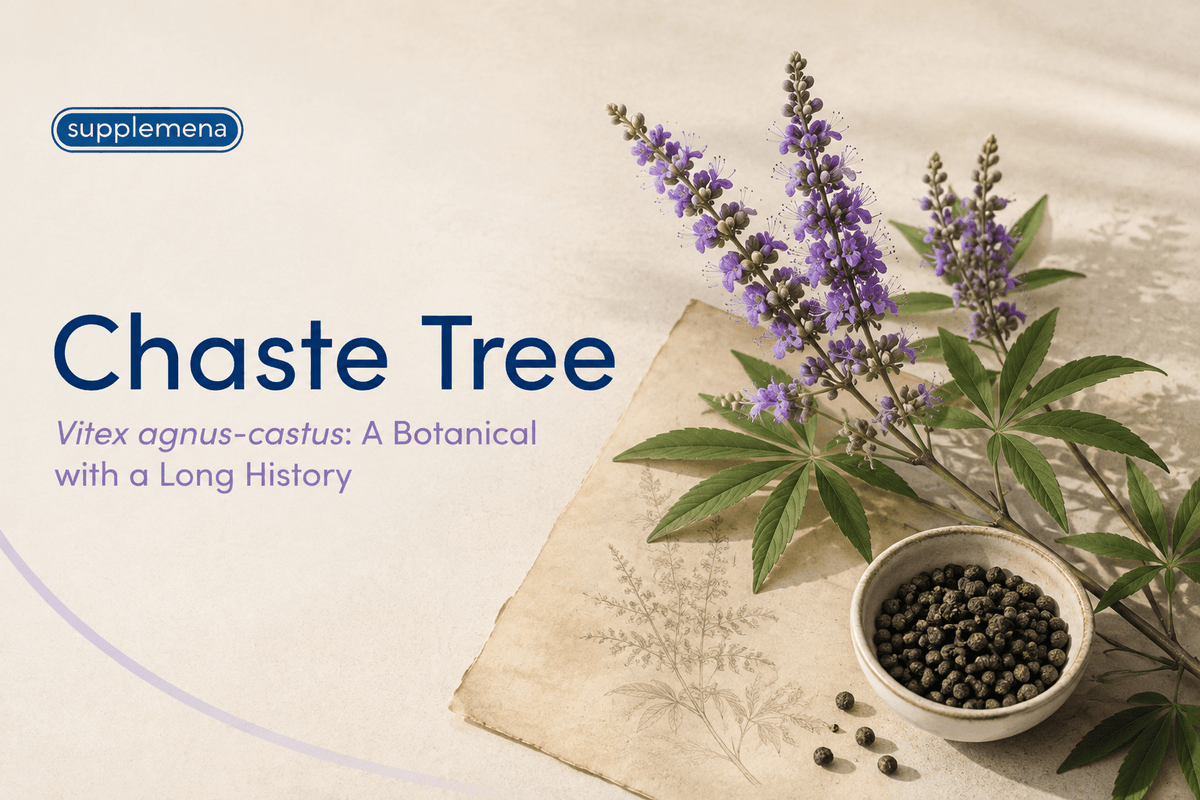
The plant itself — a deciduous shrub native to the Mediterranean region and parts of Central Asia — produces small purple flowers and dark, pepper-like berries, which is the part used in supplements today.
From whole berries to standardised extract
Historically, chaste tree was used as whole dried berries, prepared in various traditional forms. Modern supplements typically use a standardised extract instead, which allows for a consistent, measurable amount of the plant's naturally occurring compounds in every dose — rather than the natural variation you'd get from whole dried berries, where potency can vary based on growing conditions, harvest timing, and processing.
One compound commonly used as a standardisation marker is vitexin, a naturally occurring plant compound found in chaste tree. Standardising an extract to a specific vitexin content is a way of ensuring batch-to-batch consistency — it's a quality and manufacturing concept, not a claim about what the plant does in the body.
Where it's grown today
Chaste tree is cultivated across Southern and Central Europe, and supplements sourced from within the EU are typically grown, harvested, and processed under the same food safety and quality frameworks that apply to other European agricultural products — including testing for heavy metals, microbiological safety, and pesticide residues before a batch is released for use in food supplements.
A note on how we talk about chaste tree
You'll notice this article describes chaste tree's history, botany, and how it's processed — not what it does once consumed. That's intentional. Botanical ingredients like chaste tree currently sit in an unresolved area of EU food law: the European Commission has not authorised specific health claims for chaste tree, and a formal claims evaluation process for botanicals has been paused for over a decade. Until that's resolved, we'd rather tell you the genuinely interesting, well-documented history of this plant than make claims we can't back with an EU-authorised scientific basis.
If you're interested in chaste tree specifically because of something you've read elsewhere about its traditional use, that's worth a conversation with a doctor or qualified herbalist who can speak to your individual circumstances — not a supplement product page.
Our Chaste Tree capsules use a standardised extract sourced and manufactured in Germany, and sit within our Fertility range.
This article is for general historical and educational interest and does not describe any intended effect of chaste tree on the body.